Solar power plants on facades
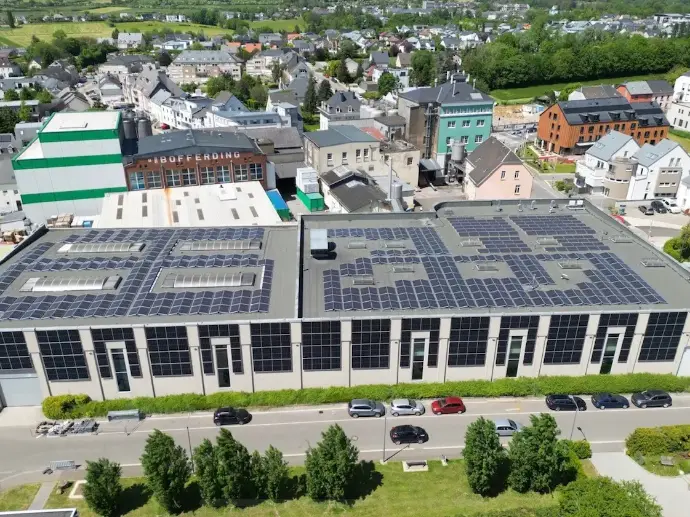

Integrate solar energy into your building architecture
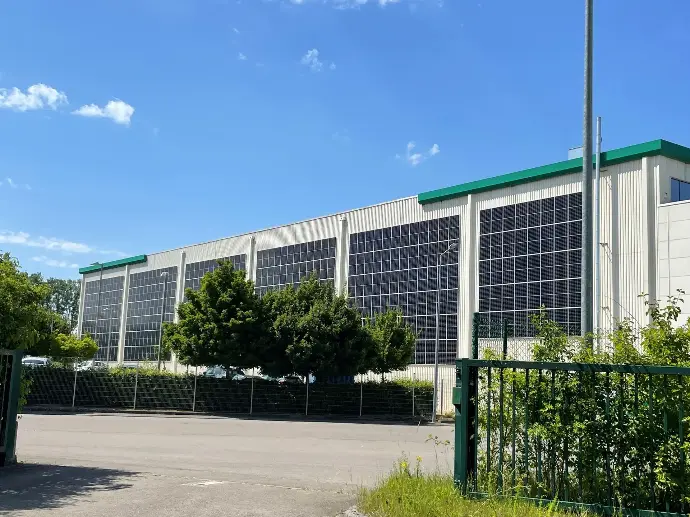
When rooftops are insufficient or unavailable, facades can be used to produce solar energy. Vertical photovoltaic panels turn walls into productive surfaces, combining architectural aesthetics and energy performance.
Suitable for office buildings, shopping centres and industrial sites in Belgium, France and Luxembourg, the EDP solar facade generates energy, improves the building’s thermal envelope and directly contributes to achieving higher ratings in certifications such as HQE, BREEAM and LEED, providing an immediate boost to property value.
Why choose facade-mounted solar panels?
Enhancing unused vertical surfaces: Your walls become green electricity generation units, without requiring any ground or rooftop space.
- Use of unused vertical surfaces: Solar facades earn points under BREEAM (Renewable Energy), HQE (Energy Management) and LEED (Energy & Atmosphere), thereby enhancing the value of your property portfolio
- Greater visibility for your sustainability commitment: A display visible from the street, providing a tangible demonstration of your CSR policy to customers, employees, local residents and partners. Significant marketing and communication impact
- Energy generation even when the roof is unavailable: The ideal solution for historic buildings (where the roof is protected), roofs that are too small, poorly oriented, shaded or already in use
- Dual function: energy + building envelope. The panels replace traditional cladding, providing waterproofing, insulation and protection whilst generating electricity
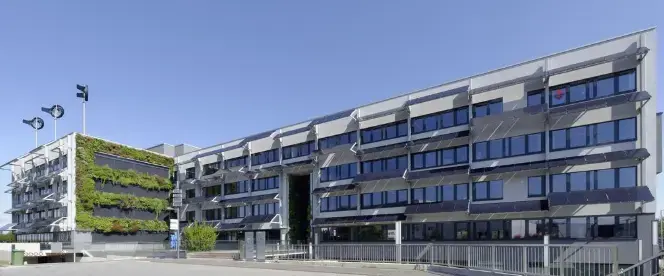
EDP: expertise, certifications and architectural integration for your facades
EDP develops solar facades for buildings of all types. Our team specialises in architectural integration, structural calculations and support with certification processes in Belgium, France and Luxembourg.
✓ Our facade expertise:
- Comprehensive technical studies: Structural analysis of the facade (load-bearing capacity, fixings), detailed sunlight analysis (shading, orientations), optimal sizing based on consumption profile
- Certification support
- Premium BIPV solutions: Partnerships with leading manufacturers (high-quality, aesthetically pleasing modules), extended performance warranties
FAQ
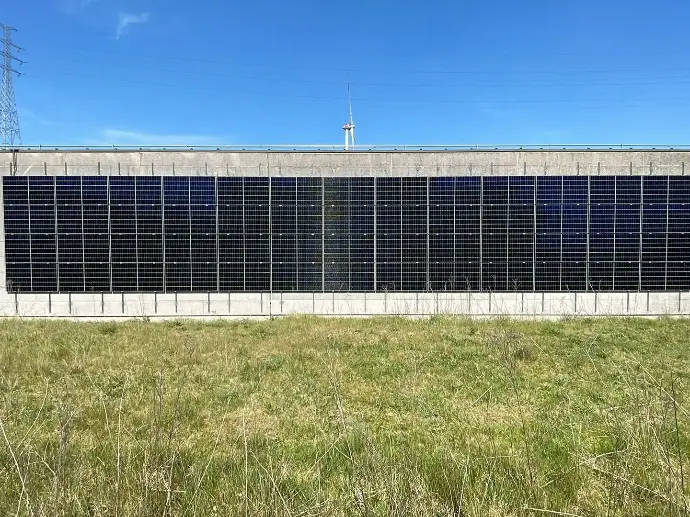
The performance of photovoltaic panels installed on a vertical facade is lower than that of a flat or pitched rooftop installation, but it remains attractive depending on the orientation. Facades oriented between southeast and southwest should be prioritized, limiting the performance loss to around 25–30% (compared to optimal orientation). Objectively, other orientations are still possible but with a very significant drop in performance, leading to return on investment periods of around 15 years (instead of 7 to 12 years for south-facing facades). Compensating advantages: very high visibility (brand image impact), better winter production (low sun angle), and reduced summer overheating.
Yes, installing solar panels on a building facade generally requires a building permit because it alters the exterior appearance of the building. The procedures vary depending on the region.
Yes, absolutely. Photovoltaic facades contribute significant points toward several major environmental certifications. For BREEAM (Building Research Establishment Environmental Assessment Method): points in the Energy category (ENE 01 – Reduction of CO₂ emissions, ENE 04 – Low-carbon technologies) and in Innovation if a BIPV solution is implemented. For HQE (Haute Qualité Environnementale): contribution to the targets related to Energy Management and Low-Impact Construction Sites. For LEED (Leadership in Energy and Environmental Design): points under Energy & Atmosphere (on-site renewable energy production). Our technical documentation includes: validated energy production calculations, BIPV compliance documentation, CO₂ emissions reduction assessments, and performance reports.
BIPV (Building Integrated Photovoltaics) refers to the integration of photovoltaic panels directly into the building envelope, where they replace traditional construction elements (cladding, glazing, guardrails). Unlike “add-on” panels, BIPV modules serve a dual function: electricity generation AND a structural role (weatherproofing, insulation, aesthetics).
BIPV advantages: superior architectural aesthetics (uniform and customizable appearance), savings on replaced construction materials (cladding, glass), compliance with strict urban planning constraints (listed buildings, protected areas), and increased property value. BIPV applications: facades (photovoltaic cladding), roofs (solar tiles, shingles), skylights and atriums (photovoltaic glass), and balcony railings. BIPV modules are available in multiple colors, textures, and finishes to harmonize with any architectural style.