Rooftop photovoltaic panels
Maximize every square meter
Turn your rooftop into a solar power plant
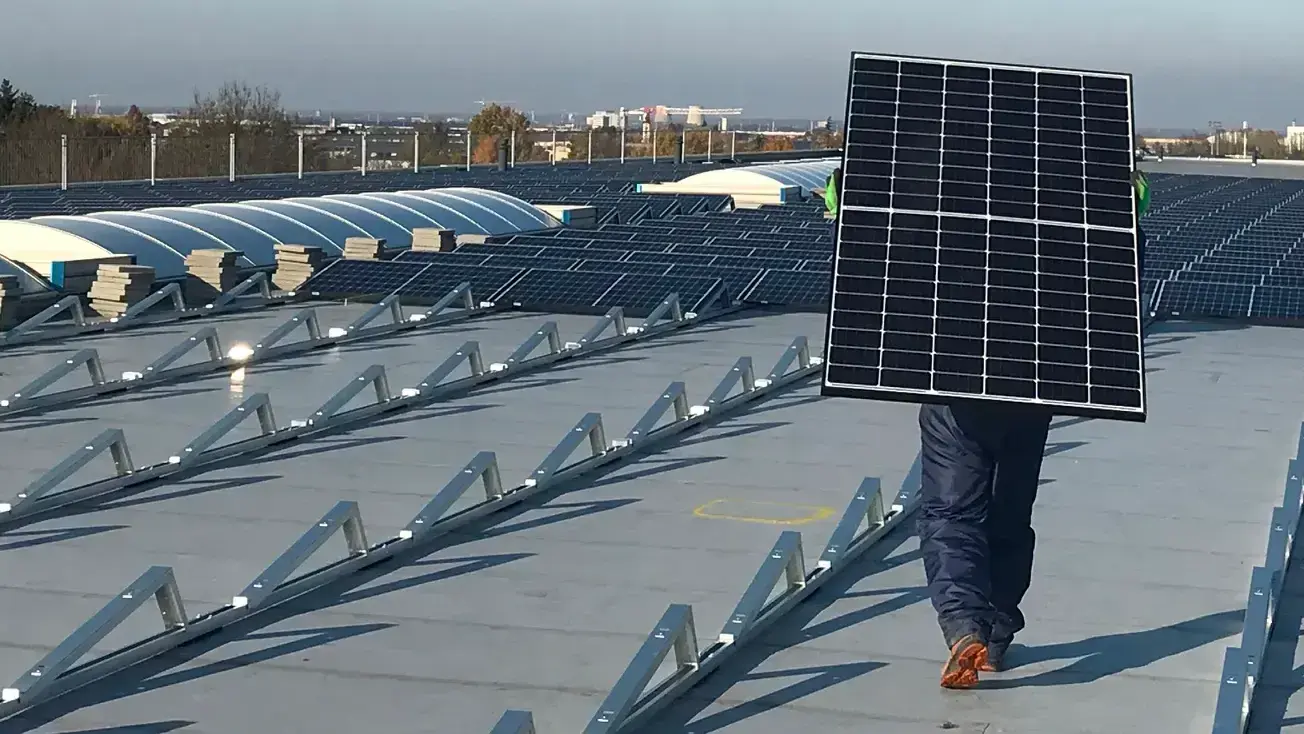
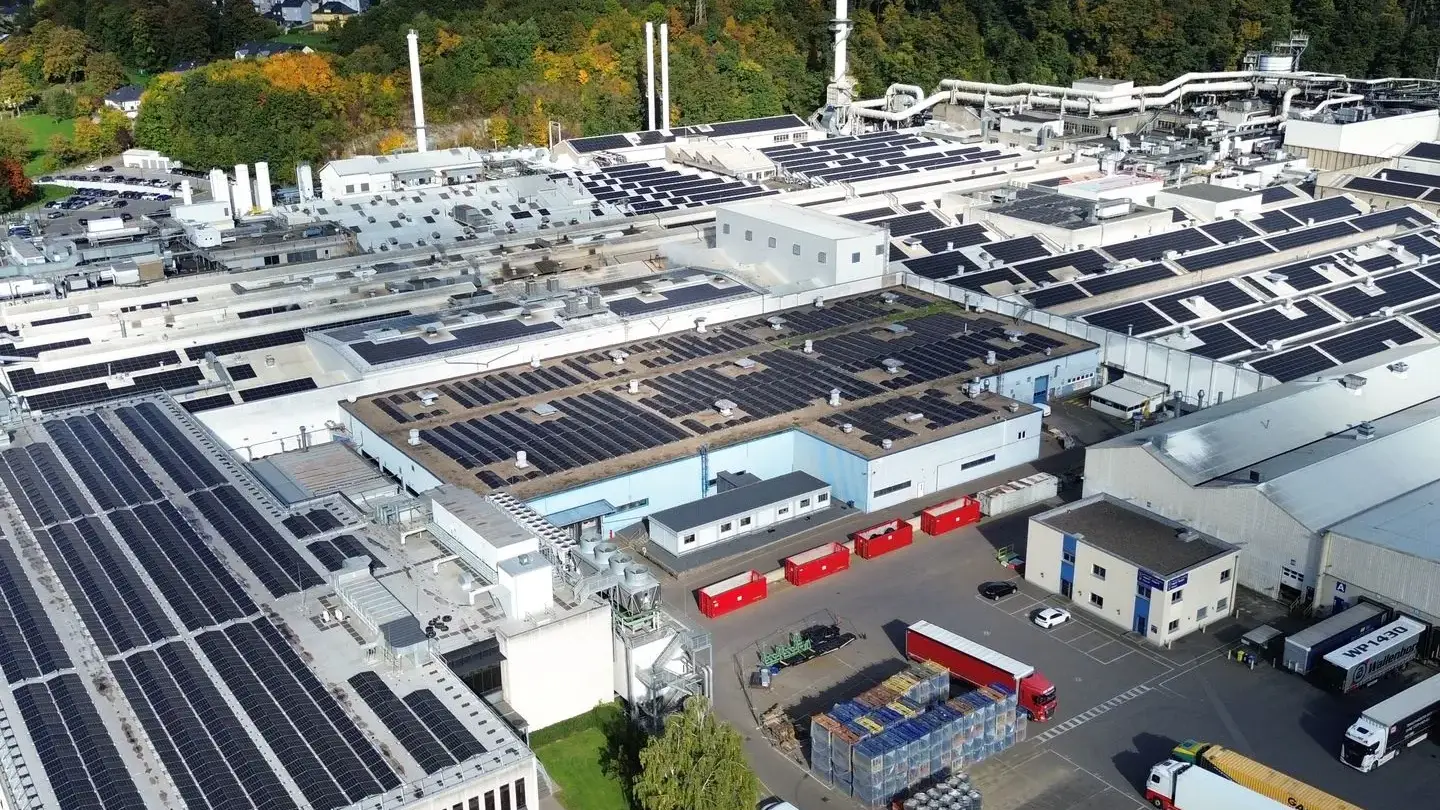
An industrial rooftop covering more than 3,000 m² represents untapped energy potential. Whether your rooftop is flat or pitched, EDP designs, finances and installs a solar power system tailored to your infrastructure, with or without battery storage, as a capital investment or on an ‘As-a-Service’ model, depending on your financial strategy.
Key performance indicators:
- 3,000 m² of solar panels = up to 500 kWp of installed capacity
- Annual production: 450,000 to 500,000 kWh (equivalent to the consumption of 125 households)
- Average ROI: 6 to 10 years with immediate savings on energy bills
- Lifetime: 25–30 years with performance guarantee over 20–25 years
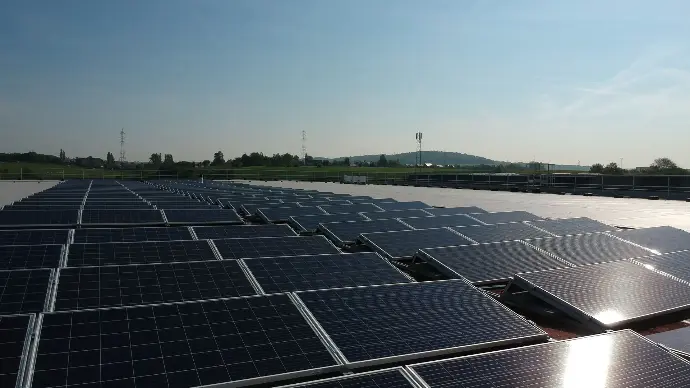
Why choose a rooftop solar installation?
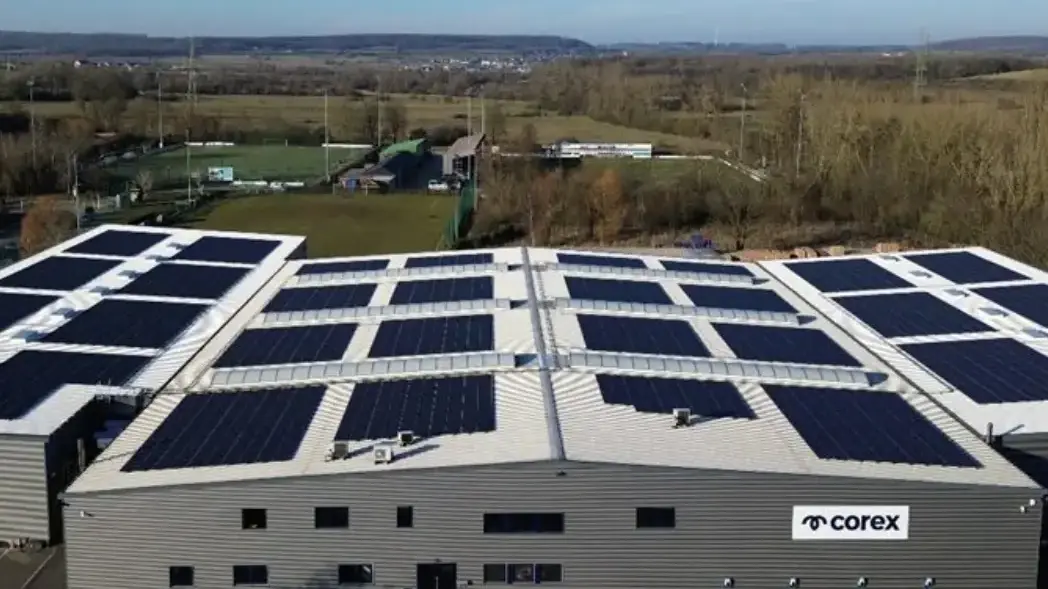
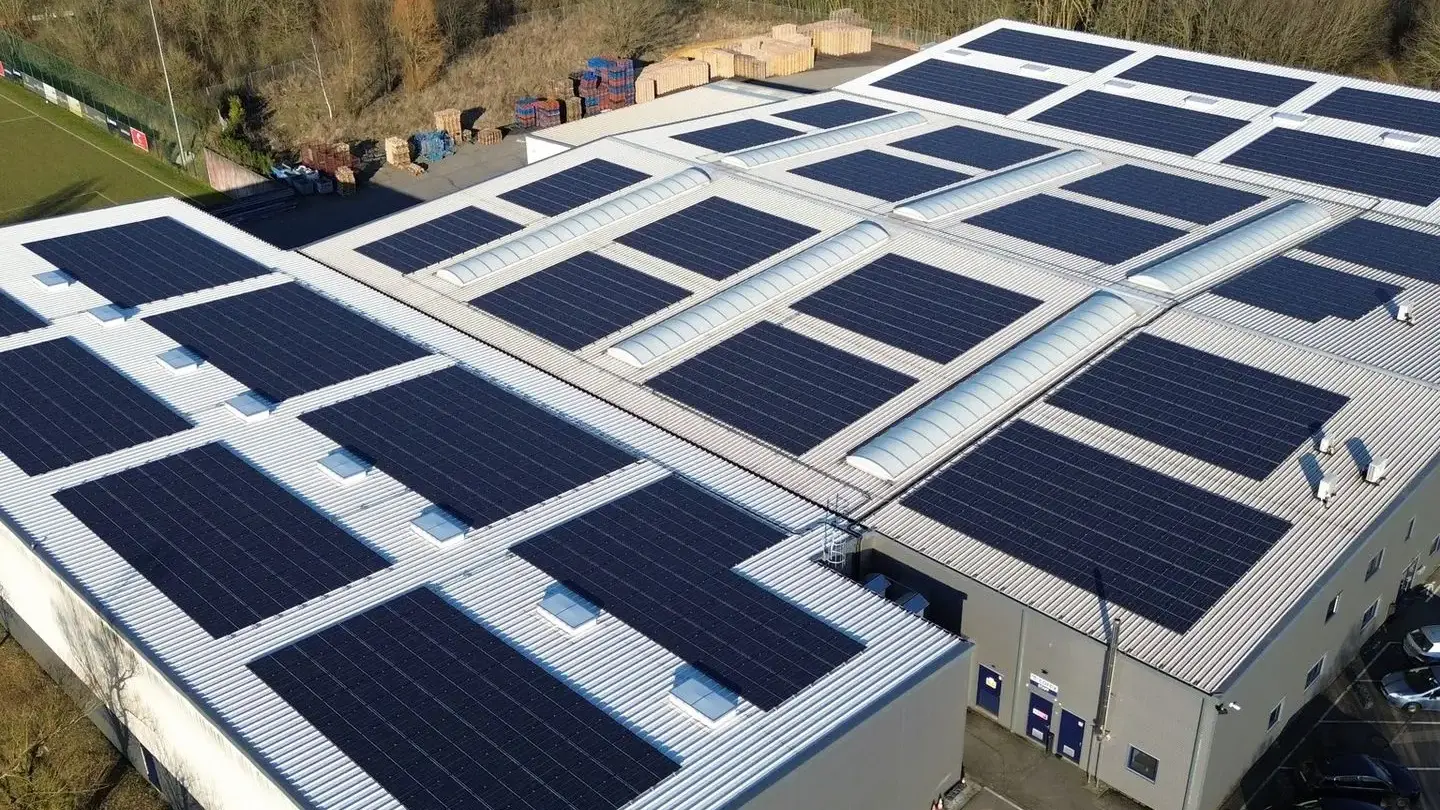
Industrial rooftops represent enormous potential for solar energy production. By using already built surfaces, you create a revenue source while actively contributing to your energy transition. Our rooftop photovoltaic installations adapt to all types of buildings.
The 5 practical benefits of a rooftop EDP power plant
- Optimal use of unused space: Your flat or pitched roofs can be turned into green power generation plants without taking up any extra floor space
- Direct reduction in electricity bills: Save on your energy bills by using the electricity you generate from your solar panels
- Enhanced protection and insulation: Solar panels protect your roof from the elements and reduce temperature fluctuations in the building
- Strong CSR signal: Showcase your commitment to the environment through clean, locally generated energy, which you can highlight in your communications
- Non-intrusive installation: Our installation work is carried out without disrupting your business operations, in strict compliance with safety standards
Rooftop-mounted EDP
Recognised expertise, with thousands of industrial projects completed worldwide
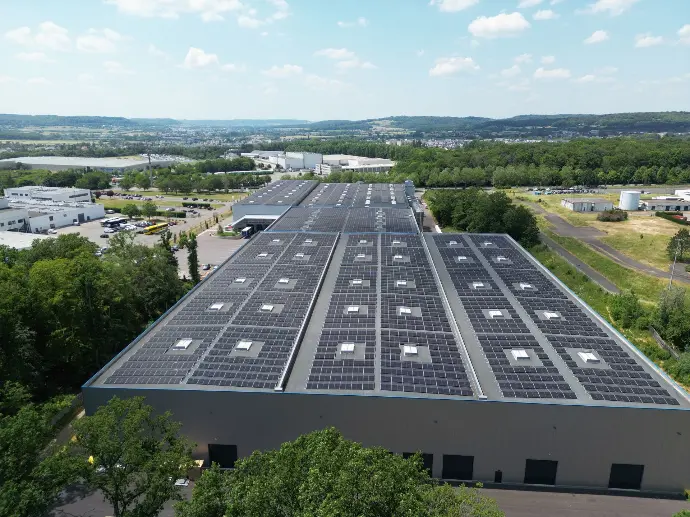
Since 2009, EDP-Enerdeal has been developing and operating industrial rooftop solar power plants in Belgium, Luxembourg and France. With several hundred MWp of installed capacity, projects on all types of industrial buildings, and a team certified to ISO 9001, ISO 14001 and VCA standards, we guarantee quality, safety and performance throughout the entire lifespan of your installation.
Our rooftop expertise:
- Adaptation to structural constraints
- Integration of batteries and intelligent control systems
- Optimization based on grid constraints
- Alignment with your consumption profile

Ready to add value to your roof?
Contact our experts for a technical analysis of your building.
FAQ
The verification of your roof’s load-bearing capacity is an essential step before any installation. Our engineers, together with an independent engineering firm, carry out a comprehensive analysis that takes into account: the weight of the solar panels and mounting system, the existing permanent loads, and the overall condition of the roof structure.
For panels laid flat on the roof (steel roofing, sloped), an average additional load of 12 kg/m² should be taken into account. For flat roofs, due to the ballast and the non-perforated installation system, an additional load of 20 to 25 kg/m² should be taken into account.
The return on investment (ROI) for a photovoltaic installation on an industrial roof varies between 6 and 10 years depending on several parameters: electricity price (the higher it is, the faster the ROI), self-consumption rate (optimized at 60-80% with battery and EMS), excluding any available subsidies or grants.
With a lifespan of 25 to 30 years, your installation generates net revenue for 15 to 20 years after payback.
With our no-investment offering called “Solar-as-a-Service,” you benefit from immediate savings starting from the very first year.
In northern France, Belgium, and Luxembourg, a well-oriented rooftop photovoltaic installation (south, southeast, or southwest) produces on average 900 to 1,000 kWh per kWp installed per year.
You can expect up to 25% more in the far south of France.
For a 500 kWp installation (approximately 3,000 m² of roof space), you can therefore expect an annual production of 450,000 to 500,000 kWh, which is equivalent to the consumption of 125 average households.
With our intelligent energy management system (EMS) and battery storage, this self-consumption rate can be optimized up to 80%.
This type of installation requires structural elements (steel, concrete, or wood) as well as foundations (concrete or steel piles), which can double — and sometimes even triple (for smaller projects or soils with lower load-bearing capacity) — the cost of a standard rooftop or ground-mounted installation.
Because the level of solar production per kWp or per m² of panels remains the same, the return on investment is, of course, affected in the same way. However, in some regions, subsidies or guaranteed feed-in tariffs are available, which can reduce the ROI to entirely acceptable levels.